Introduction
In 2025, electric vehicles (EVs) are more popular than ever. While EV technology continues to evolve, one common concern among drivers remains: charging speed. Whether you’re at home, at work, or on the road, faster charging means less waiting and more driving. This guide will show you how to charge your EV faster while keeping your battery healthy.
1. Understanding EV Charging Levels
Before you think about speed, you need to know the three main types of charging:
- Level 1 Charging (120V AC) – Slowest option, adds ~4–5 miles of range per hour. Ideal for overnight charging.
- Level 2 Charging (240V AC) – Medium speed, adds ~20–30 miles of range per hour. Perfect for home or workplace charging.
- DC Fast Charging (480V DC) – Fastest option, can add up to 200+ miles in under 30 minutes. Best for road trips.
💡 Tip: Always check your EV’s maximum charging capacity before investing in faster chargers.
2. Factors Affecting Charging Speed
Charging speed isn’t just about the charger – other factors matter:
- Battery Size & Capacity – Larger batteries take longer to charge fully.
- State of Charge (SOC) – Charging slows down after 80% to protect the battery.
- Temperature – Batteries charge slower in extreme heat or cold.
- Charger Output – Using a higher kW charger means faster charging.
- Onboard Charger Limits – Your EV’s built-in charger might cap the speed.
3. Home Charging Tips for Faster Charging
- Upgrade to a Level 2 Charger – If you’re still using Level 1, upgrading can cut your charging time by up to 70%.
- Hire a Certified Electrician – Proper wiring ensures maximum safe charging speed.
- Use Off-Peak Hours – Some utilities offer faster, cheaper charging during off-peak times.
- Precondition Your EV – Warm up or cool down your battery before charging to improve efficiency.
4. Public Fast Charging Tips
- Use DC Fast Charging for Road Trips – Ideal for quick top-ups.
- Avoid Peak Hours – Public chargers can get busy, leading to wait times.
- Plan Your Route – Use apps like PlugShare or ChargePoint to locate high-speed chargers.
- Monitor Your Charging – Disconnect after 80% to save time and avoid idle fees.
5. The Future of EV Charging
By 2025 and beyond, charging is getting faster and smarter:
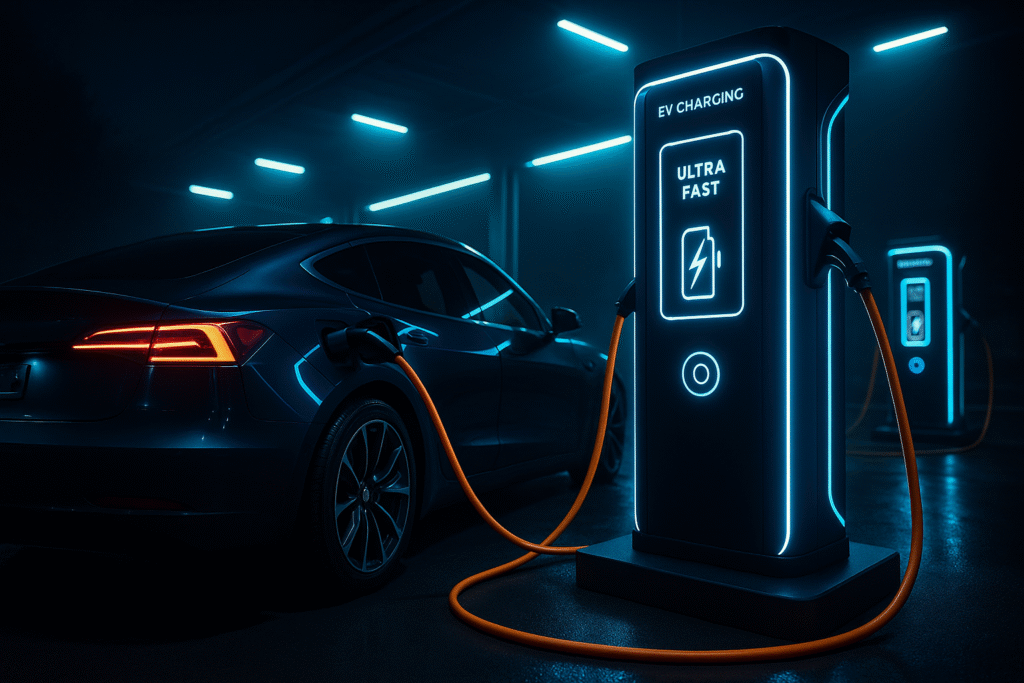
- Ultra-Fast Charging – 350kW+ chargers can add 200+ miles in under 15 minutes.
- Wireless Charging – Park and charge with no cables.
- Battery Swapping Stations – Swap your depleted battery for a fully charged one in minutes.
Conclusion
Charging your EV faster is about choosing the right charger, optimizing conditions, and planning smartly. With the right strategies, you’ll spend less time plugged in and more time on the road.