Introduction
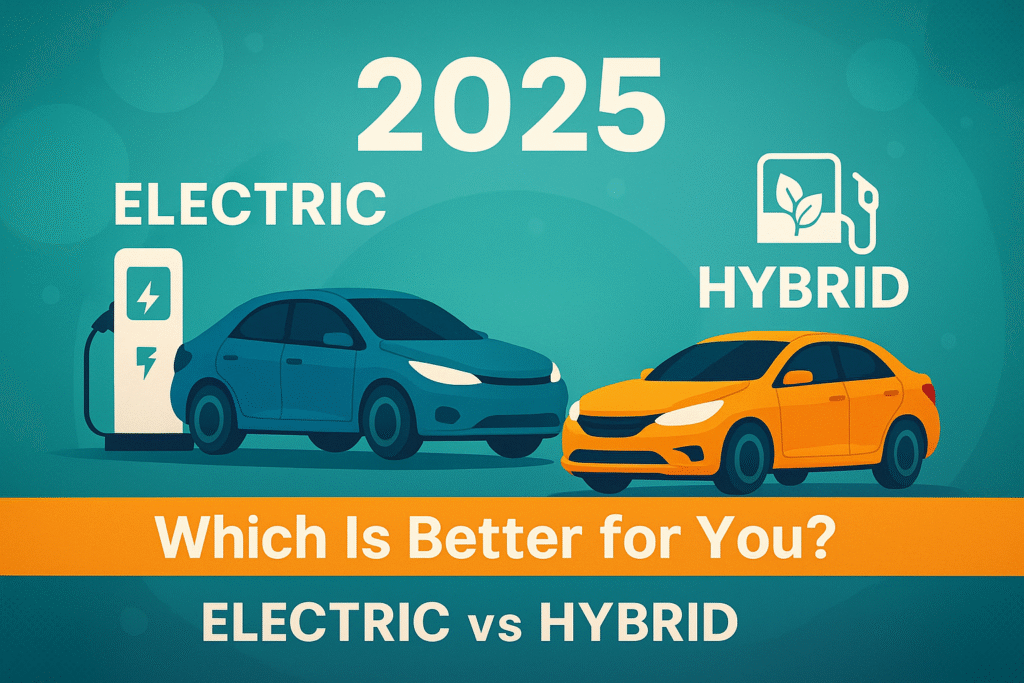
With fuel prices rising and governments pushing for cleaner transportation, many buyers in 2025 are deciding between Electric Vehicles (EVs) and Hybrid Vehicles (HEVs/PHEVs). Both offer lower emissions compared to traditional gasoline cars, but they have different strengths and weaknesses. In this guide, we’ll compare EVs and Hybrids so you can choose the right one for your needs.
What is an Electric Vehicle (EV)?
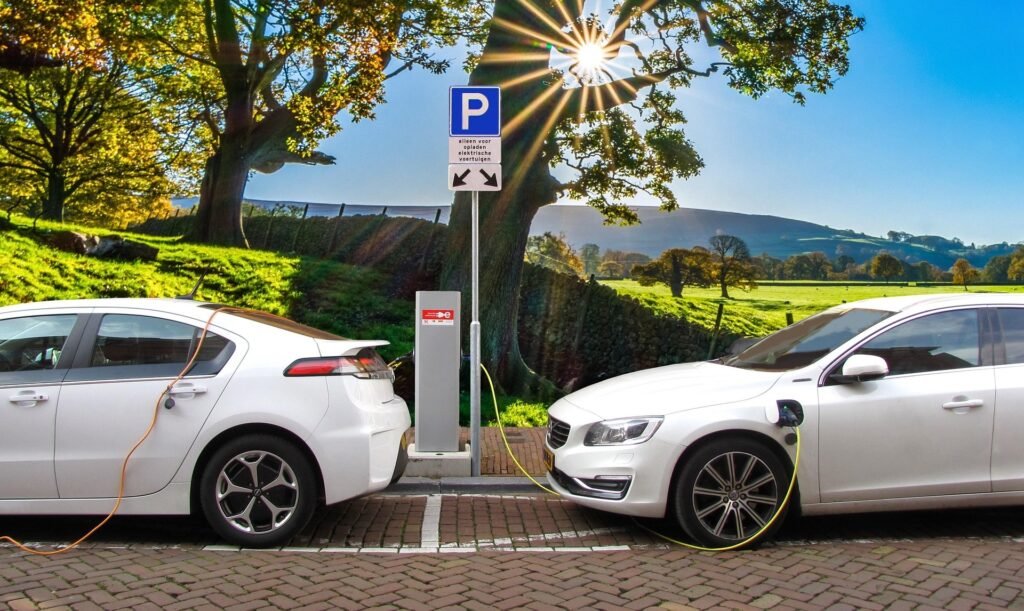
An Electric Vehicle is powered entirely by a battery and electric motor. It produces zero tailpipe emissions and requires charging from an electrical outlet or charging station.
✅ Pros of EVs
- Zero emissions – environmentally friendly.
- Low running costs – electricity is cheaper than fuel.
- Quiet & smooth driving experience.
- Less maintenance – no oil changes or complex engine parts.
❌ Cons of EVs
- Limited range compared to fuel vehicles (varies by model).
- Longer refueling time – charging can take from 30 minutes (fast charging) to several hours.
- Higher upfront cost (though prices are falling).
What is a Hybrid Vehicle?
A Hybrid Vehicle uses both a gasoline engine and an electric motor. The battery charges automatically while driving (through the engine or regenerative braking). There are two main types:
- HEV (Hybrid Electric Vehicle) – charges only through driving.
- PHEV (Plug-in Hybrid Electric Vehicle) – can also be charged from an outlet for extended electric-only range.
✅ Pros of Hybrids
- Extended range – no need to worry about charging stations.
- Lower fuel consumption than traditional cars.
- Flexible – can use fuel or electricity.
❌ Cons of Hybrids
- More maintenance – has both an engine and electric motor.
- Higher emissions than EVs.
- Smaller electric-only range (usually 20–50 miles for PHEVs).
EV vs Hybrid – Key Comparison (2025)
| Feature | Electric Vehicle (EV) | Hybrid Vehicle (HEV/PHEV) |
|---|---|---|
| Fuel/Power | 100% electric | Electric + gasoline |
| Range | 150–400 miles per charge | 400–600 miles (combined) |
| Charging/Refueling | Charging stations/home outlet | Gas stations + charging (PHEV) |
| Running Costs | Low (electricity) | Moderate (fuel + electricity) |
| Maintenance | Low | Moderate–High |
| Environmental Impact | Zero emissions | Low emissions |
| Upfront Cost | Higher | Moderate |
Which Should You Choose in 2025?
- Choose an EV if you have easy access to charging stations, want zero emissions, and lower running costs.
- Choose a Hybrid if you travel long distances regularly and want the flexibility of using both fuel and electricity without worrying about charging.
Conclusion
In 2025, Electric Vehicles are ideal for urban drivers looking for eco-friendly, low-maintenance transport, while Hybrids are a great middle ground for those who aren’t ready to fully commit to electric. Your choice will depend on your driving habits, charging access, and budget.