Introduction
Electric Vehicles (EVs) are becoming increasingly popular worldwide, but there are still a lot of myths and misconceptions about them. Whether you’re considering buying an EV or just curious, it’s important to separate fact from fiction. Let’s break down five of the most common EV myths and uncover the truth behind them.
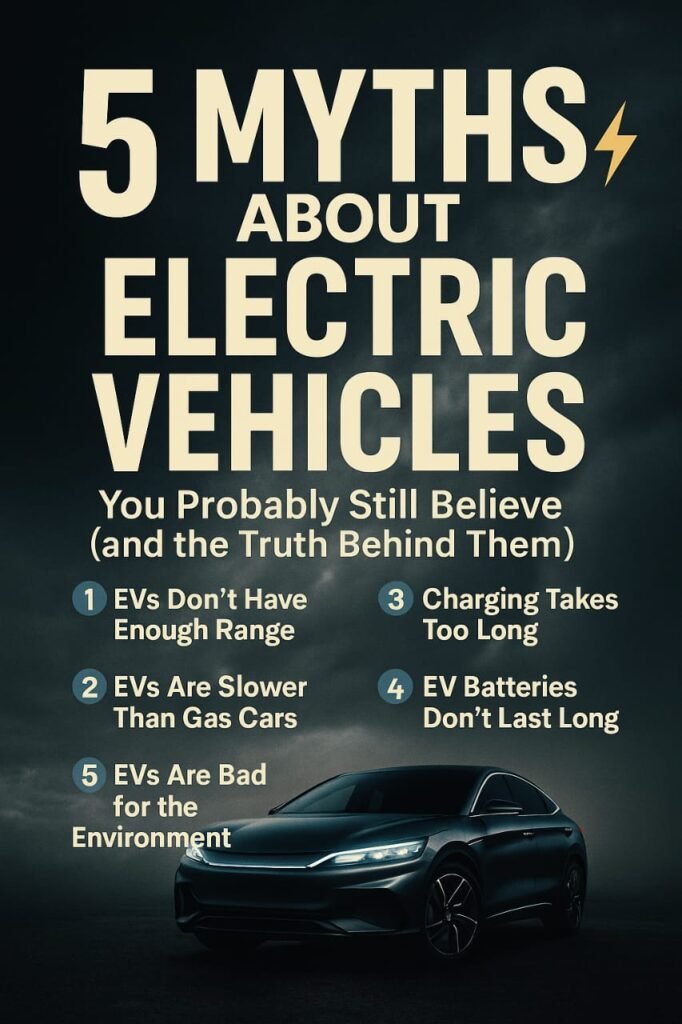
Myth: EVs Don’t Have Enough Range
Truth: Modern EVs can travel much further than most people think. Many new models offer 250–400 miles (400–640 km) on a single charge, which is more than enough for daily commuting and weekend trips. With the expansion of fast-charging networks, range anxiety is becoming a thing of the past.
Myth: EVs Are Slower Than Gas Cars
Truth: EVs often outperform traditional gas-powered cars in acceleration. Thanks to instant torque, even affordable EVs can go from 0–60 mph faster than many sports cars. For example, the Tesla Model 3 Performance does it in under 3.5 seconds.
Myth: Charging Takes Too Long
Truth: While charging at home overnight is the most convenient option, DC fast chargers can give you up to 80% charge in 20–40 minutes. That’s just enough time for a coffee break during a road trip.
Myth: EV Batteries Don’t Last Long
Truth: Most EV batteries are designed to last 10–15 years or more, with warranties covering 8 years or 100,000 miles. Battery technology is improving every year, making them more durable and efficient.
Myth: EVs Are Bad for the Environment Because of Battery Production
Truth: While battery production does have an environmental footprint, studies show that EVs still produce far fewer emissions over their lifetime compared to gas cars, especially when charged using renewable energy.
Conclusion
EV technology has come a long way, and the facts speak for themselves. As charging networks expand and battery technology improves, these myths will continue to fade away.
Thinking about switching to an EV? The future of driving is electric, and it’s closer than you think. 🚀