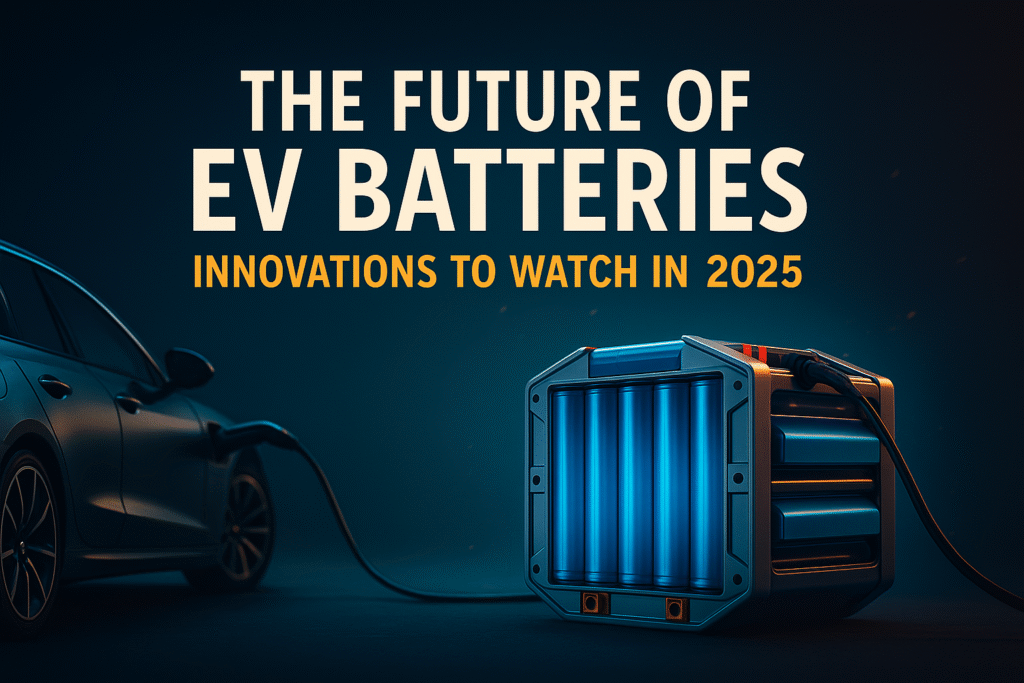
Electric Vehicles (EVs) have come a long way in the last decade, and one of the most exciting areas of innovation is battery technology. In 2025, the EV battery industry is pushing boundaries with new chemistries, improved performance, and faster charging solutions. If you’re curious about what’s coming next, here are the top innovations to watch.
1. Solid-State Batteries – The Game Changer
Solid-state batteries replace the liquid electrolyte found in traditional lithium-ion batteries with a solid material. This design promises:
- Faster charging times (up to 80% in under 15 minutes)
- Higher energy density for longer driving range
- Improved safety due to lower fire risk
Companies like Toyota and QuantumScape are making breakthroughs that could bring mass-market solid-state EVs by 2025–2026.
2. Lithium-Sulfur Batteries – Ultra-Lightweight Power
Lithium-sulfur (Li-S) batteries offer up to five times the energy density of current lithium-ion cells while using cheaper, more sustainable materials. Researchers are working to overcome cycle life limitations, and 2025 could be the year we see Li-S in commercial EVs, especially in lightweight urban vehicles.
3. Ultra-Fast Charging Technology
Charging anxiety is still one of the biggest barriers to EV adoption. In 2025, ultra-fast chargers capable of delivering 350–500 kW will become more common, reducing charge times to just 5–10 minutes for many models. This is supported by new battery cooling systems that prevent overheating during rapid charging.
4. Cobalt-Free Batteries – Sustainability First
Mining cobalt has raised ethical and environmental concerns. Battery makers are moving towards cobalt-free chemistries like lithium iron phosphate (LFP) and manganese-rich cathodes, which are:
- More sustainable
- Less expensive
- Longer-lasting under high charge cycles
Tesla and CATL are already leading the shift to cobalt-free designs.
5. Second-Life Batteries – Recycling for a Greener Future
Battery recycling and repurposing are becoming a priority. In 2025, many EV manufacturers will integrate second-life batteries into home energy storage systems, reducing waste and maximizing the value of used packs.
6. AI-Powered Battery Management Systems (BMS)
Artificial intelligence is now being used to monitor and optimize battery health. AI-based BMS can:
- Predict battery degradation
- Adjust charging patterns for longer lifespan
- Improve energy efficiency in real-time
This will not only improve performance but also save owners money in the long run.
Conclusion
The future of EV batteries in 2025 is about faster charging, longer range, sustainability, and smarter management. These innovations will make electric vehicles more accessible and practical for drivers worldwide, bringing us closer to a clean, electrified future.